
Across SAP, RPA, AI and Microsoft 365
From Task Automation to End-to-End Automation
Automation is often measured by the number of bots or workflows created, but automating a task is not the same as automating a business process. A process can include data extraction, transformation, validation, exception handling, reporting and communication across multiple systems. The bigger opportunity is to connect these activities and automate the process end-to-end.
Connecting the Technology Landscape
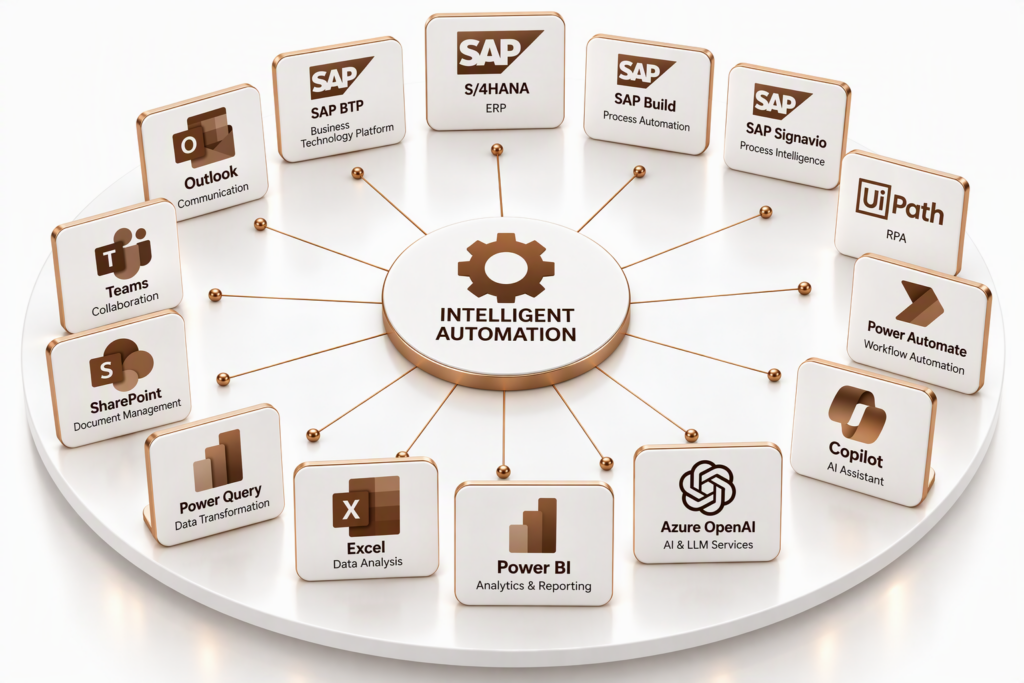
nd-to-end automation rarely depends on one technology. A Finance or Operations process may begin in SAP, use Excel or Power Query for data transformation, UiPath for RPA, Power Automate for workflow orchestration, Microsoft 365 for collaboration, and AI or Copilot where interpretation and knowledge are required.
The technical skill is not simply knowing each tool. It is understanding where each technology fits and how to connect them into one solution.
Designing the Process Architecture
Consider a recurring finance process:
SAP → Data Extraction → Transformation → Validation → Reconciliation → Exception Handling → Reporting → Distribution
Rather than treating each activity as a separate automation, the process can be designed as one connected architecture. Rules-based activities can run automatically, while genuine exceptions are routed for human investigation.
Building Reliable Automation
End-to-end automation also needs to work when things go wrong. Missing files, incomplete data, unmatched records and system errors need validation, logging and clear exception handling. A strong automation should make it easy to understand what failed, where it failed and what requires attention.
Adding AI Where It Creates Value
Solutions should also be maintainable. Business rules change, systems evolve and volumes increase. Reusable components, configurable rules, monitoring and clear ownership help automation move from a working solution to a scalable operational capability.
AI should not be added simply because it is available. Rules-based activities are often better suited to traditional automation, while AI becomes valuable when processes involve interpretation, knowledge retrieval, unstructured information or user interaction.
The strongest solutions can therefore combine SAP, RPA, workflow automation, data transformation, AI and analytics, with each technology solving the part of the process it is best suited to address.
Beyond the Bot
The future of automation is not about choosing between RPA, workflow automation and AI. It is about designing processes where these technologies work together effectively.
The question should move beyond “What can this tool automate?” to “How do we design the complete process so the right technologies work together from beginning to end?”
That is the difference between automating a task and engineering an intelligent, scalable business process.